Chapter – 1
End of Bipolarity
Overview
This chapter deals with the study of Post World War II era that was concerned with formation and disintegration of certain economic and military alliances. Here we will discuss Post world war II conditions of Soviet Union, its problems and disintegration. Precisely we look into following topics:
- Formation of USSR
- Soviet System
- Merits and Demerits of Soviet System
- Fall of Berlin wall
- Mikhail Gorbachev and Soviet Union
- Causes of disintegration of USSR
- Consequences of Disintegration of USSR
- Shock Therapy
- Consequences of Shock Therapy
- Post Soviet Economies
- Tensions and conflicts Balkans and Central Asian Countries
- India and Russia Bilateral agreement
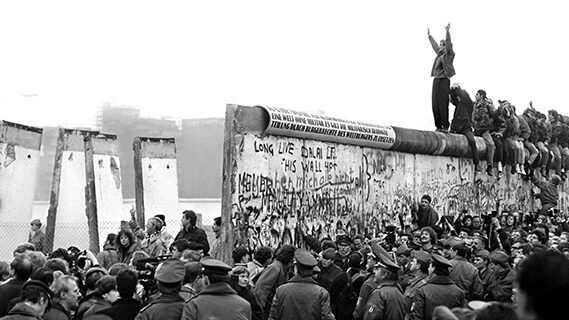
- Fall of Berlin wall established a landmark in political history.
- It paved the way for German Economic and political unification in October 1990.
- The wall which had been established in year 1961 at the peak of cold war, dividing Berlin in to Communist and Capitalist block, was breached and Iron curtail was collapsed.
- Impact: End of Cold War
- German Reunification
- Democratic movements
How was USSR formed?
- USSR (Union of Soviet Socialist Republics) was the resultant of Russian Revolution of 1917.
- It was officially established on December 30, 1922 including four republics Russia, Ukraine, Belarus and Transcaucasian federation.
What was Soviet System?
- Soviet System was based on the concept of Socialism primarily based on the creation of egalitarian society.
- The Soviet system gave privacy to the state and the Institution of the party .
- The political system centred around the Communist Party no other political or opposition party was allowed .
- The economy was planned and controlled by the state.
- The Soviet economy was more developed than the rest of the world except for the US.
- It had a modern and complex communication network having energy resources including oil, iron steel, machinery, production and transport sector that connected its remotest area with efficiency.
- Its domestic industry was well developed .
- The Soviet state insured minimum standard of living for all its citizens,
- The government subsidize basic necessities including health, education child care and welfare schemes for its citizens.
- There was no unemployment .
- State ownership was the dominant form of ownership land and productive ,assets were controlled by the state.
- There was no private property and the society was based on the principles of equality.
Merits of Soviet System
- Public control of assets and resources ensured easy accessibility and equitable distribution of resources.
- Full employment .
- Everybody was ensured minimum living standard.
- Essential commodities were provided on highly subsidised prices.
Demerits of Soviet System
- The Soviet system, however, became very bureaucratic and authoritarian, making life very difficult for its citizens.
- Lack of democracy and the absence of freedom of speech stifled people who often expressed their dissent in jokes and cartoons.
- The Communist Party of the Soviet Union had tight control over all institutions and was unaccountable to the people.
- The party refused to recognise the urge of people in the fifteen different republics that formed the Soviet Union to manage their own affairs.
What were the major reasons that alienated commons away to Soviet System?
- The Communist Party refused to recognise the urge of people in the fifteen different republics that formed the Soviet Union to manage their own affairs including their cultural affairs.
- Although, on paper, Russia was only one of the fifteen republics that together constituted the USSR, in reality Russia dominated everything.
- People from other regions felt neglected and often suppressed.
- In the arms race, the Soviet Union managed to match the US from time to time, but at great cost.
- The Soviet Union lagged behind the West in technology, infrastructure (e.g., transport, power), and most importantly, in fulfilling the political or economic aspirations of citizens.
Question: Explain the features of the Soviet System
Ans: 1. The Soviet system gave privacy to the state and the Institution of the party .
2. The political system centred around the Communist Party no other political or opposition party was allowed .
3. The economy was planned and controlled by the state.
4. The Soviet economy was more developed than the rest of the world except for the US.
5. It had a modern and complex communication network having energy resources including oil, iron steel, machinery, production and transport sector that connected its remotest area with efficiency. Its domestic industry was well developed .
6. The Soviet state insured minimum standard of living for all its citizens. The government subsidize basic necessities including health, education child care and welfare schemes for its citizens.
7.There was no unemployment . State ownership was the dominant form of ownership land and productive ,assets were controlled by
the state. There was no private property and the society was based on the principles of equality.
Question: Explain the Causes of collapse of Soviet union.
Answer: The causes for collapse may be listed as below:
1.The Soviet system became very bureaucratic and authoritarian making life very difficult for it citizens.
2.The one party system and the tight grip of the Communist Party of union over all Institutions. The Communist Party was not accountable to the people and functioned in a dictatorial manner. The party refused to recognise the respiration of the people in its different republics to manage their own affairs including their cultural affairs .
3. Russians and dominated all over the other groups people from other reasons wealth neglected in office
rise of nationalism and the desi public growth. Russians dominated over all the other ethnic groups. People from other regions felt neglected and often suppressed. Rise of nationalism and the desire for sovereignty rose within various republics.
4.The Arms race with the USA depleted its resources and effected its economic growth. The Soviet Union lagged behind the West in technology and infrastructure.
5.There was growing economic distress among its citizens and regional aspirations grew stronger in the Republics.
6.The Soviet invasion of Afghanistan in 1979 weakened the system and wages continued to grow, productivity and technology saw lowered growth. There were shortages in all consumer goods and food imports increased every year.
7.The Soviet economy was faltering in the late 70s and became stagnant.
Gorbachev and the Disintegration:
Mikhail Gorbachev became General Secretary of Communist Party in 1985 . Information and Technological revolution taking place in West.
Decision of Gorbachev was to normalize Relations with the West.
The people of East European Countries started to protest against their own Government and Soviet
Control.
Gorbachev initiated the policies of economic and political reform and democratisation.
Reforms were opposed by leaders within the Communist Party.
A Coup took place in 1991.
This coup encouraged by Communist Party hardliners.
Boris Yeltsin emerged as a National Hero in opposing coup.
Boris Yeltsin won election and shake off centralised Control.
Power began to shift from Soviet Centre to Republics.
The Central Asian Republics did not ask for independence.
Central Asian Republics (CARs) wanted to remain with Soviet Federation.
Under the leadership of Yeltsin, Russia, Ukraine and Belarus declared that Soviet Union was
disbanded. Communist Party was banned. 19
Commonwealth of Independent States (CIS) came as other Republics.
Russia was now accepted as the successor state of the Soviet Union.
Russia accepted all the International Treaties and commitments of the Soviet Union.
The Old Soviet Union was dead and buried.
Why did Soviet Union Disintegrate?
Internal weaknesses of Soviet Political and Economic institution was failed to fulfilled aspirationsof
the people.
Economic Stagnation.
Shortages of Consumer Goods.
Large section of the society began doubt.
The Soviet economy used much of its resources in maintaining a nuclear and military arsenal.
This led to a huge economic burden.
Ordinary citizens became more knowledgeable about the economic advance of the West. They could
see the disparities between their system and the systems of the West.
The reality of its backwardness came as a political and psychological shock.
The Soviet Union had become stagnant in an administrative political sense.
The Communist Party that had ruled the Soviet Union for over 70 years.
The Communist Party was not accountable to the people.
Rampant corruption.
Inability of the system to correct mistakes.
The unwillingness to allow more openness in government.
Centralisation of authority in a vast land.
The party bureaucrats gained more privileges than ordinary citizens.
Gorbachev promised to reform the economy and loosen the administrative system.
Gorbachev’s accurate diagnosis of the problem.
There were sections of Soviet society which felt that Gorbachev should have moved much faster
They did not benefit in the way they had hoped, or they benefited too slowly.
In this ‘tug of war’, Gorbachev lost support on all sides and divided public opinion.
People felt that he did not adequately defend his own policies.
The rise of nationalism and the desire for sovereignty within various republics including Russia. 20
Baltic Republics (Estonia, Latvia and Lithuania), Ukraine, Georgia, and others proved to be thefinal
and most immediate cause for the disintegration of the USSR.
During the Cold War many thought that nationalist unrest would be strongest in the Central Asian
republics.
Ethnic and religious differences with the rest of the Soviet Union.
Three broad kinds of enduring changes that resulted from it.
Results of Disintegration of USSR
The end of the Cold War and of ideological confrontation .
Rise of a unipolar world with the hegemony of USA.
End of arms race in the world and the possibility of new peaceful world order.
End of the Warsaw Pact. Change in the balance of power of the world.
Power relation in world politics changed. The USA became the soul superpower.
Capitalist economy became the dominant economic system. International institution like the World
Bank and International Monetary Fund became powerful advisors to all these countries.
Emergence of 15 sovereign countries from the erstwhile Soviet Union.
Russia inherited the USSR status as a permanent member of the United Nation Security Council.
Shock Therapy:
Countries by a painful process of transition from an authoritarian socialist system to
democratic capitalist system.
The model of transition in Russia, Central Asia and east Europe that was influenced by the World
Bank and the IMF came to be known as ‘Shock Therapy’.
Shock therapy varied in intensity and speed amongst the former second world countries, but its
direction and features were quite similar
These countries were required to make a total shift to a capitalist economy,
Private ownership was to be the dominant pattern of ownership of property.
Privatisation of state assets and corporate ownership patterns were to be immediately brought in.
Collective farms were to be replaced by private farming and capitalism in agriculture.
Shock therapy also involved a drastic change in the external orientation of economies
The free trade regime and foreign direct investment (FDI) were to be the main engines of change.
This involved openness to foreign investment, financial opening up or deregulation and currency
convertibility. 21
Consequences of Shock Therapy
Shock therapy did not lead the people into the promised utopia of mass consumption.
Large state-controlled over industrial complex almost collapsed.
90 per cent of its industries were put up for sale to private individuals.
Restructuring was carried out through market forces and not by government-directed industrial
policies. This was called ‘the largest garage sale in history’, as valuable industries were undervalued
and sold at throwaway prices.
Vouchers were given to citizens.
Citizens sold their vouchers in the black market because they needed the money.
The value of the RUBLE, (Russian currency) declined dramatically.
Rate of inflation was so high.
People lost all their savings.
The collective farm system disintegrated.
Russia started to import food.
The old trading structure broke down.
The old system of social welfare was systematically destroyed.
Withdrawal of government subsidies.
Large sections of the people fell into poverty.
The middle classes were pushed to the periphery of society,
Academic and intellectual manpower disintegrated or migrated.
A mafia emerged in these countries and started controlling many economic activities.
Privatisation led to new disparities.
Russia, were divided between rich and poor regions.
The construction of democratic institutions was not given the same attention and priority as the
demands of economic transformation.
The constitutions of all these countries were drafted in a hurry, including Russia.
In Central Asia, the presidents had great powers and became very authoritarian
The presidents of Turkmenistan and Uzbekistan appointed themselves to power first for ten
years.
Economy of Russia, started reviving in 2000, ten years after their independence.
The reason for the revival for most of their economies was the export of natural resources like oil,
natural gas and minerals.
Azerbaijan, Kazakhstan, Russia, Turkmenistan and Uzbekistan are major oil and gasproducers
.
Areas of tension and conflicts in the former Soviet Republics
Soviet Republics are prone to conflicts and many have civil wars and insurgencies.
In Russia, two republics, Chechnya and Dagestan, have had violent secessionist movements.
Moscow’s method of dealing with the Chechen rebels and indiscriminate military bombings have
led to many human rights violations but failed to deter the aspirations for independence.
Tajikistan witnessed a civil war that went on for ten years till 2001.
In Azerbaijan’s province of Nagorno-Karabakh, some local Armenians want to secede and join
Armenia. 22
In Georgia, the demand for independence has come from two provinces, resulting in a civil war.
There are movements against the existing regimes in Ukraine, Kyrgyzstan and Georgia. Countries
and provinces are fighting over river waters.
The Central Asian Republics are areas with vast Hydrocarbon Resources, which have brought
them economic benefit.
Central Asia has also become a zone of competition between outside powers and oil companies.
After 11 September 2001, the US wanted military bases in the region.
Russia perceives these states as its ‘Near Abroad’ and believes that they should be under Russian
influence.
China has interests here because of the oil resources.
Czechoslovakia split peacefully into two, with the Czechs and the Slovaks forming independent
countries.
Balkan republics of Yugoslavia. After 1991, it broke apart with several provinces like Croatia,
Slovenia and Bosnia and Herzegovina declaring independence.
India and the post communist
India has maintained good relations with all the post-communist countries strongest relations arestill
those between Russia and India.
India’s relations with Russia are an important aspect of India’s foreign policy.
Indo-Russian relations are embedded in a history of trust and common interests.
Russia and India share a vision of a multipolar world order.
A Multipolar World is the co-existence of several powers in the international system, collective
security greater regionalism, negotiated settlements of international conflicts and an independent
foreign policy for all countries.
More than 80 Bi-lateral Agreements have been signed between India and Russia as part of the Indo-
Russian Strategic Agreement of 2001.
India stands to benefit from its relationship with Russia on issues like Kashmir, Energy Supplies,
Sharing information on international terrorism access to Central Asia, and balancing its relations
with China.
India is the Second Largest Arms Market for Russia.
The Indian military gets most of its Hardware from Russia.
India is an Oil Importing Nation.
India is seeking to increase its energy imports from Russia and the republics of Kazakhstan and
Turkmenistan. 23
Russia is important for India’s Nuclear Energy plans and assisted India’s Space Industry by giving,for
example, the Cryogenic Rocket when India needed it.
Russia and India have collaborated on various Scientific Projects.
Unipolar world
Unipolar world unipolarity means there is a soul superpower that is dominant in the international
system. Unipolarity means that at present the USA is the only superpower and its military power
economic power but also its cultural presence. It means the domination of single power in the world
that is USA in politics.
US military action
First operation Desert Storm 1990-91 President George W Bush senior
First Gulf War a military operation consisting of 34 collision forces to expel occupying Iraqi forces
from Kuwait.
Operation infinite reach 1998 President Bill Clinton-
A series of retaliatory cruise missiles carried out by the United States again Al-Qaeda in Sudan in
Tanzania following the 1998 United States Embassy bombing in Kenya and Tanzania.
Operation enduring freedom 2001 President George W. Bush-
US military response against 9/11attack in Afghanistan to destroy Taliban.
Operation Iraqi freedom 2003 President George W.Bush
Second Gulf War :Immediate goal of removing Saddam Hussain ‘s regime and destroying its ability
to use weapons of mass destruction.
Middle East Crisis
In August 1990 Iraq invaded Kuwait occupying and subsequently an annexing it.
After a series of diplomatic attempts failed at convincing error to quit its aggression the United Nations
mandated the liberation of Kuwait by force .
A massive collision forces 6,60000 troops from 34 countries fought against Iraq and defeated it and
what came to be known as first gulf war .
The UN operation ,which was called Operation Desert Storm was overwhelmingly an American
military operation. The highly publicised use of so cold smart bombs by the US led some observers to
call this a computer war .
As a part of its Global War on terror the USA launched operation enduring freedom 2001 against all
those suspected to be behind this attack mainly Al-Qaeda and the Taliban regime in Afghanistan.
On on 19th March 2003 the US launched It’s invention of Iraq under the code name operation Iraqi
freedom more than 40 other countries joined in the US lead collision of the willing after the UN refuse
to give its manded to the admission the US invasion of Iraq was in some crucial respect both a military
and political failure. 24
Afghanistan War
After the Soviet forces left Afghanistan in 1991 in the year 1994 a group of Fundamentalist Islamic
students took control of the city of Kandhar and started a campaign to seize power in the country
They were called the Taliban. The Taliban ruled country also became safe heaven for international
terrorists.
The attacks on the World Trade Centre in New York which have come to be known as 9 /11 were
launched by the terrorist outfit Al-Qaeda the led by Osama Bin Laden in the USA which killed US
citizens and led to the subsequent war in Afghanistan .The war in Afghanistan began in 2001. The
Taliban were overthrown in November 2001 by British and American armed forces. The US and
NATO combat mission formally ended in December 2014, the 13- year Afghanistan War had become
the longest war ever fought by the United States. However, the war in Afghanistan is far more over
and throughout 2019 and into 2020,Violence continues the across Afghanistan as the United States
increased air strikes and raids targeting the Taliban. In August 2021 Taliban has once again take an
over Afghanistan. The US and its troops have left Afghanistan.
Democratic politics and democratization
Democratic politics depends on a free flow of information among citizens ,groups ,candidates for
public office, rights of citizens and political parties .Democratic politics enhances the dignity of
citizens
Democratization is the process or transition to a more democratic political regime and government.
It may also be a transition from an authoritarian regime to a full democracy.
Democratization makes a government more accountable towards its citizens .
It helps to improve the quality of decision making and increases the involvement of citizens in
policy making.
decisions. It also provides a method to deal with differences and conflicts.
The Middle East ,North Africa and many other parts of the world still do not have much or have a
lesser form of Democratic politics as part of their system.
Democratization in CIS
The Commonwealth of independent States CIS was founded in 1991 after the dissolution of the Soviet
Union.
The start of systematic reforms in the CIS is closely linked to the dissolution of the Soviet Union in
December 1991.
The Commonwealth of independent state CIS has 12 of the 15 former soviet republic as participants
in the CIS.
Membership :12 states Armenia, Azerbaijan, Belarus, Georgia, Kazakhstan, Kyrgyzstan, Moldova,
Russia, Tajikistan, Turkmenistan, Ukraine and Uzbekistan. (presently only 9 countries- Georgia and
Ukraine not formally part of it anymore) Georgia’s 2003 Rose Revolution and the Orange revolution
in Ukraine in 2004 have initiated the democratization process in CIS. 25
Tajiskistan and Kyrgyzstan held parliamentary election in 2005 .
The process of democratization and the establishment of proper public governance is in ongoing
process in this region.
Various democracy building endeavours like more rights for the citizens , holding elections
,constitutional are some of the measures being adopted.
Arab Spring
The 21st century witnessed emergence of new developments for democracies and democratization in
West Asian countries ,one such event is characterized as Arab Spring that began in 2009.Located in
Tunisia the Arab Spring took its roots where the struggle against corruption, unemployment and
poverty was started by the public which turned into a political movement because the people
considered the existing problems as outcome of autocratic dictatorship. The demand for democracy
that started in Tunisia spread throughout the Muslim dominated Arab countries in West Asia. Hospitals
Mubarak who had been in power in Egypt since 1979 also collapsed as a result of the massive
democratic protests.
Immediate causes
It was sparked by the first protests that occurred in Tunisia on 18 December 2010 following to a
fruit seller Mohammad Bouazizi’s self immolation in protest of police corruption and ill treatment.
The wave began when protests in Tunisia and Egypt toppled their regimes in quick succession,
inspiring similar attempts in other Arab countries.
A power struggle continued after the immediate response to the Arab Spring in these countries.
These protests where against corruption, wanting increased political participation the brought greater
economic quality.
Social media has been heralded as the driving force behind the swift spread of revolution throughout
the Arab world ,as new protests appeared in response to success stories shared from those taking place
in other countries
In 2019 ,multiple uprisings and protests movements in Algeria ,Sudan, Iraq Lebanon and Egypt havfj
।e been seen as a continuation of the Arab Spring.
In all these countries protest, anti-government rallies, sit -ins, strikes were organised .
As of May 2019, only the uprising in Tunisia has resulted in a transition to constitutional democratic
governance.
Consequences
Not every country so success in the protest movement and demonstrator expressing their political
and economic grievances where often met with violent correct on by their country security forces
In some countries leadership changed and reserves were held accountable.
Over throw of the president Ben Ali and resignation of the prime minister in Tunisia .
In Algeria the 19 year old emergency was lifted . In Jordan King Abdullah dismiss the Prime Minister of and his cabinet.
Economic concessions by the rulers in Saudi Arabia and Oman .
over through of the president .
Over throw of the president Hosni Mubarak who was later convicted of corruption and ordered to
stand trial for the killing of the protesters.
This uprising has resulted in civil war and the overthrow of governments in Libya, Egypt, and
Tunisia.
Outcome of the Arab Spring
In the after math of the Arab Spring in various countries ,there has been a wave of violence in
instability
The long term effects of the Arab Spring are yet to be seen.